A common confusion when you first start researching
The question of outdoor vs indoor kart racing has no single answer for every company. It depends on the specific goal of the event. Understanding the real differences before deciding helps you avoid choosing the wrong model and then finding out it doesn't suit your group size or the weather on the day.
Many event organizers searching for kart racing services for a company for the first time assume outdoor and indoor differ only in whether there is a roof. In reality, the two models differ in almost every aspect of operation, from speed and track design to how well they suit each type of event.
Differences in speed and track design
An outdoor kart track usually has a longer layout with fewer tight corners, letting the karts reach a considerably higher top speed than indoors. It suits experienced drivers who want to feel real speed. An indoor track, by contrast, is designed with more corners in a smaller area, with limited speed to keep things safe in a space with low ceilings and structural columns, which suits newcomers better.
Differences in weather and schedule certainty
This is the most important difference for a corporate event organizer. Outdoor depends entirely on the weather, and heavy rain can force a race session to be postponed or cancelled midway. Indoor has no such risk: once the schedule is set it stays the same whatever the weather outside, a factor that matters especially when organizing in rainy season or at year end.
Differences in location and travel time
Outdoor tracks are usually in the outskirts or neighboring provinces to have enough land, meaning longer travel for the whole group. Indoor tracks are usually built inside commercial complexes in the city center, saving considerable time and travel cost.
An example of the indoor model in Ho Chi Minh City
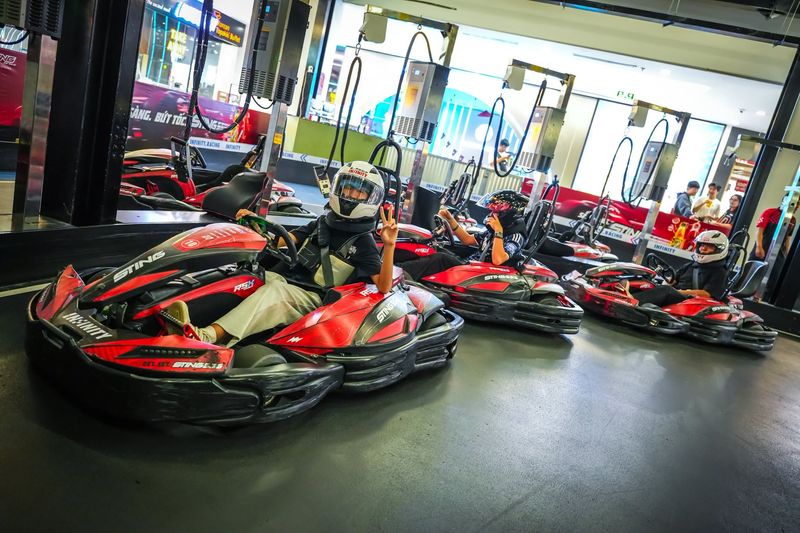
The three-level indoor kart track at Infinity Racing, inside Vincom Thao Dien, is an example of this model. The 300-meter track has 16 corners spread across 3 levels, designed so that first-time drivers and experienced ones can run on the same track at controlled speeds. The operating team there also advises on and builds both indoor and outdoor kart venues for other partners, so events follow a professional operating standard and are not a mere kart rental place.
Maintenance and safety across the two models
An aspect rarely mentioned when comparing outdoor and indoor is track and kart maintenance. An outdoor track takes direct impact from sun and rain, so the surface and karts need more frequent maintenance to keep grip and safety, especially after heavy rain when the surface can hold water or turn slippery. An indoor track, free of weather effects, usually keeps more stable operating conditions year-round, reducing the risk of having to stop for sudden maintenance.
On safety, both models need an operating team watching continuously, but an indoor track has an advantage in controlling visibility and lighting since it doesn't depend on the time of day, while an outdoor track in the late afternoon can face fading natural light. For companies especially concerned about safety when hosting a large group, this is a question to ask the operator directly before deciding, instead of relying only on a first impression of the space.
So which should a company choose
For corporate team building, where most staff have never driven a kart and the company needs a certain schedule, indoor is almost always the safer choice. Outdoor suits small groups that already have experience, want a truly speed-oriented sporting event and have enough buffer time for the weather. The deciding question isn't which is more fun, but which fits the group size and the level of certainty the company needs for the event day.
Tell me your group size and preferred timing, and I will send a detailed quote within 24 hours. Send a quote request or book a direct 30-minute call.