A scenario nobody wants but that often happens
This risk is tied to the nature of outdoor team building and isn't a rare mishap. Any company that has held outdoor team building year after year can recall at least one time it had to deal with a similar situation.
The whole group is on the bus, and by the time they arrive heavy rain is falling. Every outdoor event organizer has heard of this scenario, and in the long rainy season of the south it isn't a rare risk but one to account for from the planning stage.
Three specific risks when it rains on the day
The first risk is a last-minute postponement or cancellation, when the whole previous week of preparation is almost entirely lost. The second is the cost of a backup plan, usually a rushed rental of an indoor hall or venue at a higher-than-normal price because of the late booking. The third, rarely mentioned but real, is the group's morale when a plan everyone was excited about is upended at the last minute, which cuts the emotional benefit team building is meant to deliver.
Why backup plans often don't solve the problem
Many outdoor event organizers have a plan B, but the backup usually only solves the party part and not the main planned activity. A team building day designed around outdoor physical games, once moved into a backup hall, almost has to drop the main activity and is left with just the meal.
How to remove this risk when choosing the venue
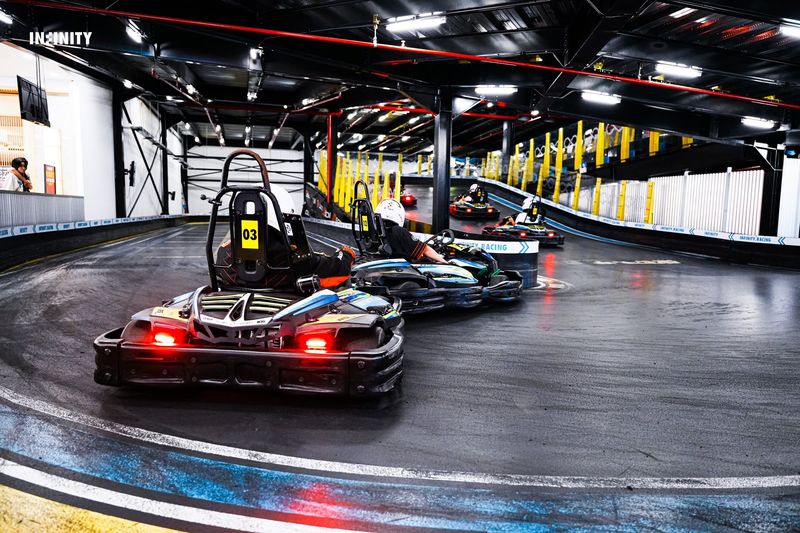
The surest way isn't buying weather insurance or preparing a more careful backup plan. It is picking a venue where the main activity already takes place indoors. The Team Building package at Infinity Racing is an example of this direction: the whole three-level kart track and both event areas are indoors at Vincom Thao Dien, so rain has no effect on the planned schedule. That is also why many companies move completely from outdoor fields to this model in the year-end season.
Opportunity cost when comparing the two options
An emergency backup plan for rain usually costs 15-30% more than the original plan, not counting the organizing team's rushed handling time. Meanwhile, an indoor all-inclusive package with a reference investment of VND 70-100 million (roughly US$2,700-3,900) already covers the activity, food and entertainment, with no weather-related extras at any point in the event.
How to read the weather forecast properly before deciding
Even if you have chosen outdoor team building, how you follow the forecast affects the real level of risk. A forecast within 24-48 hours of the event is usually far more accurate than one 7-10 days out, which only indicates a general trend. Many event organizers make the mistake of relying entirely on the long-range forecast to decide the plan, when they should treat it as an early reference and keep watching closely as the date approaches.
A practical rule many event organizers apply is to set the final decision point 48 hours ahead, based on the forecast at that time, to trigger the backup plan if needed instead of deciding at the last minute. This gives the logistics team enough time to prepare the alternative without handling it in a rush. Still, it only reduces the risk rather than removing it completely, unlike choosing an indoor venue from the beginning.
A related article if you are still weighing it
If you still aren't sure whether to go fully indoors or keep outdoor with a backup plan, indoor team building: when rain is no longer a risk presents the solution side in more detail, while this article focuses on the risk to avoid.
Conclusion for whoever is planning this year
Weather risk isn't something a company can control, but the venue is entirely within its control. For companies that have had rain ruin a team building plan at least once, switching fully to an indoor venue isn't a slightly safer choice. It is a way to eliminate entirely a risk that never needed to exist in the first place.
Tell me your group size and preferred timing, and I will send a detailed quote within 24 hours. Send a quote request or book a direct 30-minute call.